
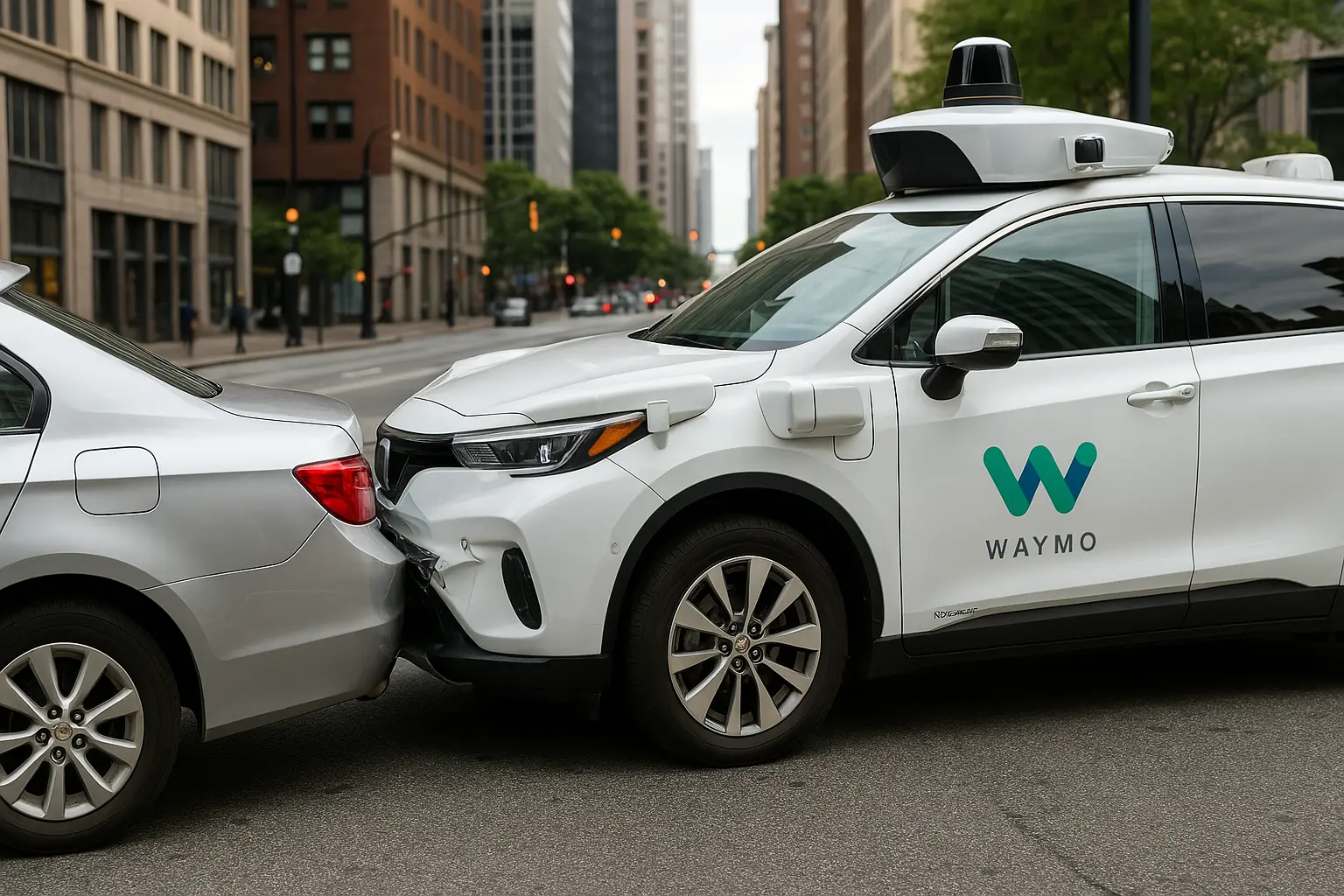
If you were recently hit by a Waymo, riding in one when it crashed, or sharing the road with one when something went wrong, you are probably asking the same question thousands of Atlantans have started asking: Who is actually responsible when the car has no driver? This guide walks you through what Georgia law says about Waymo accidents, who can be held liable, what insurance applies, and what steps to take if you are hurt. You do not have to figure this out alone.
How Did Waymo End Up On Atlanta Roads?
Waymo launched its fully driverless robotaxi service in Atlanta in June 2025, in partnership with Uber, covering a 65-square-mile area that includes Midtown, Buckhead, and Downtown. Riders request a trip through the Uber app, and if a Waymo is available, they are matched with a driverless Jaguar I-PACE electric SUV.
Atlanta is one of only five U.S. cities where Waymo currently offers paid public rides, alongside San Francisco, Phoenix, Los Angeles, and Austin. Waymo has announced plans to extend onto Atlanta highways in early 2026, which means the number of self-driving vehicles on I-75, I-85, and GA-400 is about to grow significantly.
This matters because Atlanta is already one of the most accident-prone cities in the country. According to the Georgia Department of Transportation, Atlanta is already one of the most accident-prone cities in the country. Add autonomous vehicles to that mix, and the legal questions get complicated fast.
For a free legal consultation, call (404) 888-8888
Who Is Liable In A Waymo Accident In Atlanta?
Liability in a Waymo accident can fall on several parties, including Waymo itself as the operator of the autonomous system, Uber as the fleet manager, the vehicle manufacturer for product defects, other human drivers on the road, or some combination of all of them. Unlike a standard car accident, there is no single “driver” to blame.
Here is a breakdown of who may be on the hook depending on how the crash happened:
- Waymo LLC – As the company that built and operates the self-driving system, Waymo can be held responsible for accidents caused by software malfunctions, sensor failures, poor training data, or the system making the wrong decision in a complex road situation.
- Uber – In Atlanta, Uber manages the Waymo fleet and handles dispatch. If the accident involves routing errors, maintenance issues, or operational negligence, Uber may share liability.
- Jaguar Land Rover – The manufacturer of the I-PACE vehicles Waymo uses. If the crash involved a mechanical defect, brake failure, or structural issue unrelated to the self-driving software, product liability claims may apply.
- Third-party drivers – If another human driver caused the crash (for example, by running a red light and hitting a Waymo), their insurance and personal liability come into play.
- Component and software suppliers – Companies that provide lidar sensors, mapping data, or software components to Waymo may be liable if their specific components caused the failure.
Georgia follows a modified comparative negligence rule, meaning fault can be split between multiple parties. You can still recover compensation as long as you are less than 50 percent responsible for the crash. In a Waymo case, that often means an attorney has to piece together fault across corporate actors, not just individual drivers.
What Insurance Applies After A Waymo Accident?
Waymo carries its own commercial insurance coverage, which typically applies when the autonomous vehicle is actively carrying passengers or en route to pick one up. Georgia also requires autonomous vehicle operators to carry more than twice the minimum liability coverage required for standard passenger vehicles.
This is one of the most important differences between a Waymo crash and a regular car accident. A standard Georgia driver is only required to carry $25,000 per person and $50,000 per accident in bodily injury coverage. For serious injuries, that amount often runs out before the medical bills are even finalized.
Higher coverage applies only if you can prove which entity is at fault. Getting there requires understanding which policy covers what, which is where many passengers and third-party drivers run into trouble on their own.
Possible insurance layers in a Waymo accident include:
- Waymo’s commercial liability policy – Primary coverage when the autonomous system is driving
- Uber’s rideshare policy – May apply because the Waymo was dispatched through the Uber app, particularly during active rides
- The third-party driver’s policy – If another human driver caused or contributed to the crash
- Your own uninsured or underinsured motorist (UM/UIM) coverage – Optional in Georgia, but it can fill gaps if the other party’s coverage is disputed or insufficient
- Product liability coverage – Manufacturers and component suppliers carry their own policies for defect-related claims
Without a lawyer who understands how these policies stack and when each applies, it is very easy to end up collecting from the wrong source, for less than your claim is actually worth.
Complete a Free Case Evaluation form now
What Should I Do After A Waymo Accident?
If you are involved in a Waymo accident in Atlanta, call 911 immediately, seek medical attention, document the scene thoroughly, and avoid giving any recorded statement to Waymo, Uber, or their insurers before speaking with an attorney. The first 24 to 48 hours after the crash are critical for preserving evidence.
Here is the order that matters:
- Call 911. Even if the crash seems minor, you need an official police report on file. Georgia law requires it for any accident involving injury or significant property damage.
- Seek medical attention right away. Adrenaline and shock can mask serious injuries. Concussions, internal bleeding, whiplash, and soft tissue damage often take hours or days to show symptoms. A medical record created immediately after the crash is also one of the strongest forms of evidence for your claim.
- Document everything at the scene. Photos of the Waymo vehicle (including the sensors and lidar equipment on the roof), vehicle damage, road conditions, traffic signs, weather, and any visible injuries. Note whether there was a safety driver in the car or whether it was fully driverless at the time of the crash.
- Screenshot the Uber app. If you were a passenger, take screenshots of the trip details, timestamps, pickup and dropoff locations, driver status, and trip ID. This creates a digital record that proves the Waymo was actively dispatched, and the higher commercial coverage should apply.
- Report the accident in the Uber app. When you report a crash through Uber, the app logs it to your trip record with timestamps and location data. That timestamp may later determine which insurance policy applies.
- Get contact information from witnesses, other drivers involved, and anyone who saw what happened. Independent witnesses can be especially valuable in autonomous vehicle cases because the technology is new and the official narrative may lean heavily on Waymo’s own data.
- Do not admit fault or apologize at the scene. Even casual statements can be used later by insurers to shift blame.
- Be very careful with Waymo or Uber representatives. They may dispatch someone to the scene or call you soon after the crash. Do not give a recorded statement, do not agree to a quick settlement, and do not sign anything before talking to your own lawyer.
- Call a Waymo accident lawyer before the insurance company calls you. These cases move fast, and Waymo has full-time legal and technical teams working to minimize the company’s exposure from the moment a crash happens.
Click to contact our personal injury lawyers today
What Evidence Matters Most In A Waymo Accident Case?
The most powerful evidence in a Waymo accident case is the data the vehicle itself records, including sensor logs, camera footage, lidar readings, GPS data, and the software’s decision-making history in the seconds before the crash. Your attorney will need to move quickly to request and preserve this data before it is overwritten or lost.
Every Waymo vehicle is essentially a rolling computer. It constantly records what its sensors see, what the software was doing, and what decisions it was making. That data can reveal whether the system:
- Detected a pedestrian, cyclist, or other vehicle in time
- Correctly identified traffic signals, stop signs, and road markings
- Applied brakes appropriately given the situation
- Made a safe routing or lane-change decision
- Experienced a sensor malfunction or software error
Getting access to that data is not automatic. Waymo is a corporation with legal teams dedicated to controlling the narrative in accident cases. Without a formal preservation request from your attorney, sensor data can be overwritten within days or weeks.
Other evidence that matters:
- Dashcam footage from nearby vehicles
- Traffic and business surveillance cameras in the area
- The 911 call recording
- The official Georgia Uniform Motor Vehicle Accident Report
- Your complete medical records tied to the crash
- Witness statements
- Uber trip records and timestamps
Has Georgia Dealt With Self-Driving Car Accidents Before?
Georgia was one of the first states to legalize autonomous vehicles on public roads, enacting its self-driving car legislation back in 2017. That makes Atlanta one of the most legally mature markets for autonomous vehicle liability in the country, even though real-world Waymo crashes in the state are still relatively new.
Under Georgia law, the “operator” of an autonomous vehicle is the entity that engages the self-driving technology, not a human passenger in the vehicle. That is a critical distinction. In traditional crashes, liability almost always follows the driver. In Waymo crashes, it follows the company that caused the software to operate the car.
Real incidents in 2025 and 2026 have already started testing how this framework holds up:
- In late 2025, Waymo vehicles were caught repeatedly illegally passing stopped school buses in Atlanta and Austin, leading Waymo to issue a voluntary recall of more than 3,000 vehicles
- In January 2026, a Waymo vehicle struck a child near a Santa Monica elementary school, prompting a National Highway Traffic Safety Administration investigation
- In May 2025, a Waymo wheel detached mid-drive in Austin, causing the car to skid to a stop and injuring the passenger
Each of these categories—traffic violations by the software, pedestrian strikes, mechanical failures, and multi-vehicle crashes caused by unpredictable AV behavior—creates different legal paths to compensation. The legal framework is still evolving, and the outcomes often depend on how aggressively an attorney is willing to dig into the technical evidence.
What compensation can I recover after a Waymo accident?
If you were injured in a Waymo accident in Atlanta, you may be entitled to compensation for medical bills, lost wages, pain and suffering, property damage, and in some cases punitive damages if the AV system’s failure was particularly reckless.
Here is what that typically covers:
- Medical expenses – Emergency care, hospital stays, surgeries, rehabilitation, physical therapy, and future medical treatment you will need as a result of the crash
- Lost wages and lost earning capacity – Income missed during recovery and reduced earning ability if your injuries are long-term
- Pain and suffering – Compensation for the physical and emotional toll of the injury
- Property damage – Repair or replacement of your vehicle and other property destroyed in the crash
- Wrongful death damages – If a family member was killed, the surviving family may recover for funeral expenses, lost financial support, and the full value of the life lost
- Punitive damages – May apply where the AV company’s conduct involved conscious indifference to known safety risks, such as deploying software that had a known failure pattern
Under Georgia Code Section 9-3-33, you generally have two years from the date of the accident to file a personal injury lawsuit. That deadline runs fast in complex cases that require technical expert witnesses and corporate discovery, so acting early matters.
Key Takeaway
At Bader Law, we understand the unique technical, legal, and insurance issues that Waymo accidents raise, and we know how to push back against corporate legal teams that are counting on you to handle this alone. You pay nothing unless we win your case.
Call or text us at (470) 447-2800, or fill out our free case evaluation form. The consultation is free, the conversation is confidential, and you will walk away with a clear picture of what to do next.
Frequently Asked Questions
Can I sue Waymo if I was a passenger in the car during the accident?
Yes. Passengers injured in a Waymo vehicle have the right to seek compensation, and terms of service agreements do not override that right under Georgia law. The key is identifying which insurance policy applies—Waymo’s commercial liability coverage or Uber’s rideshare policy—and making sure your claim is filed against the correct party before the statute of limitations runs out.
What if Waymo was not at fault and another driver caused the crash?
You can still pursue a claim. If another human driver caused the accident, their insurance would be the primary source of recovery, with Waymo or Uber potentially involved depending on the circumstances. Your attorney can also tap your own uninsured or underinsured motorist coverage if the at-fault driver does not have enough insurance to cover your injuries.
Do I have to accept the first settlement offer from Waymo’s insurance company?
No, and you should not. Corporate insurers typically make low initial offers hoping you will accept before you know the full extent of your injuries or the strength of your case. A Waymo accident lawyer can evaluate what your claim is actually worth, push back on lowball figures, and negotiate from a position of strength.
How long do I have to file a Waymo accident lawsuit in Georgia?
Generally, two years from the date of the crash for personal injury claims, under O.C.G.A. § 9-3-33. Evidence preservation in Waymo cases is a separate, much shorter timeline. Sensor data, camera footage, and witness memories can disappear within days, so contacting an attorney quickly matters as much as the two-year deadline.
Does Georgia’s comparative negligence rule affect my Waymo accident claim?
Yes. Georgia uses a modified comparative negligence system, meaning you can recover compensation as long as you are less than 50 percent at fault. If you were partly responsible (for example, jaywalking when a Waymo hit you), your compensation may be reduced by your percentage of fault. A lawyer can help you push back on unfair fault allocation.
Call or text (404) 888-8888 or complete a Free Case Evaluation form